Parents often spend weeks choosing paint colors, bedding, and décor for a child’s room, but the furniture itself deserves even more attention. The desk where homework happens, the bookshelf toddlers reach for, and the chair used during playtime can all affect comfort, safety, and indoor air quality.
That is why eco-friendly kids furniture is becoming a smarter choice for families who want children’s rooms that feel beautiful, practical, and healthier from the start.
Which Certifications Should Parents Look for Before Buying?
Certification labels help parents separate real sustainable furniture from vague marketing claims. FSC certification matters because it shows the wood comes from responsibly managed forests. GREENGUARD Gold certification is also important because it focuses on low chemical emissions and cleaner indoor air.
Parents can also look for OEKO-TEX fabrics, organic cotton textiles, and CertiPUR-US foam when buying upholstered seating, cushions, or mattresses. These labels help confirm that the materials have been tested for safer use in children’s spaces.
Best Materials for a Sustainable Children’s Room
Solid wood is one of the strongest choices for kids furniture because it can handle daily wear and still look good for years. Pine, birch, maple, and oak are popular options when they come from responsible sources.
Bamboo is another excellent material because it grows quickly and has a naturally clean, modern look. It works well for playroom seating, stools, storage pieces, and small tables. Rubberwood is also a strong option because it uses wood from rubber trees after their latex-producing years, which makes it a practical and sustainable material.
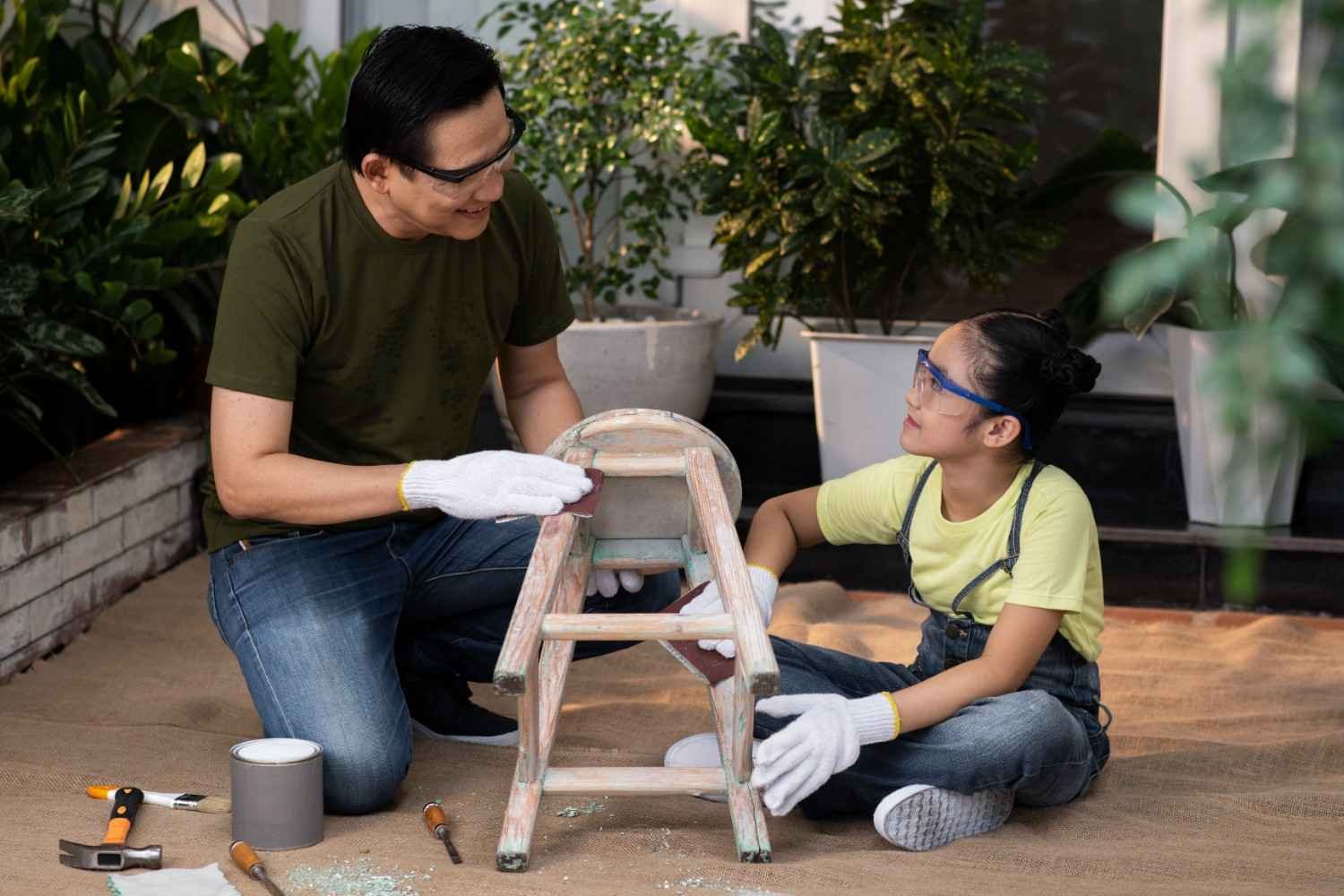
Upcycled and reclaimed wood can give a child’s room unique character while reducing demand for new timber. Reclaimed pallet wood, local timbers, or repurposed boards can work beautifully for rustic seating, shelves, or playroom accents when they are properly cleaned, sanded, and sealed with child-safe finishes.
Study and Activity Tables for Learning Spaces
A study table or activity table often becomes the busiest furniture piece in a child’s room. Kids use it for homework, drawing, puzzles, crafts, snacks, and pretend play. For this reason, I prefer a kids study table and chair made with renewable wood, smooth edges, sturdy legs, and non-glare, non-toxic coatings.
Adjustable-height tables and chairs are especially useful because they grow with the child. Instead of replacing furniture every year or two, parents can keep one quality setup through several stages. This saves money and reduces waste.
Montessori Bookshelves and Playroom Storage
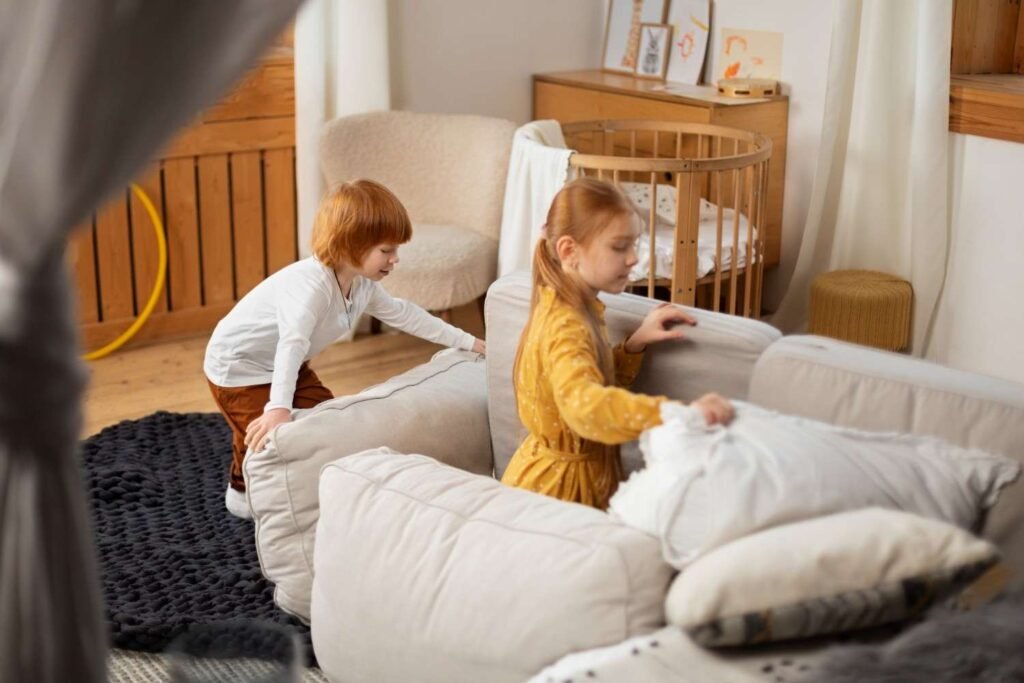
Montessori-style bookshelves and open storage units are popular because they encourage independence. Low-height shelves allow children to see, reach, and return books or toys without constant help. This keeps the room organized while supporting confidence and responsibility.
Birch plywood and rubberwood are great choices for these storage units because they are durable and naturally attractive. I also prefer open shelves over plastic bins when possible because they reduce plastic use and help keep the room visually calm.
Playroom Seating and Lounging Ideas
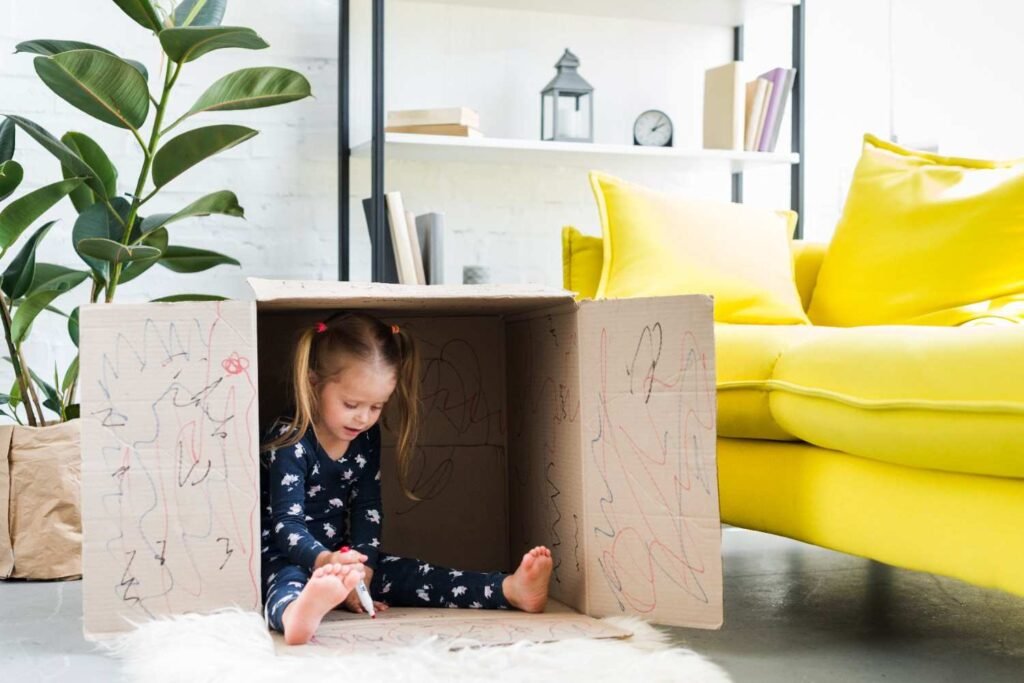
Children need a comfortable corner where they can read, rest, build, or imagine. Eco-conscious seating can include bamboo chairs, reclaimed wood benches, organic cotton floor cushions, or small wooden lounge pieces with non-toxic finishes.
The goal is to create a cozy space without filling the room with synthetic materials that wear out quickly. Durable seating also helps families avoid the cycle of buying cheap pieces that break, peel, or become unsafe after a few months.
Why Modular and Adjustable Furniture Is Worth It
One of the best reasons to choose eco-friendly kids furniture is long-term value. Modular beds, adjustable desks, convertible cribs, stackable storage, and flexible shelving can adapt as your child grows.
This matters because children’s needs change fast. A toddler reading nook may become an elementary homework station, and a toy shelf may become a bookcase. When furniture can shift with those changes, parents buy less, waste less, and create a room that feels useful for many years.
What Should Parents Avoid in Kids Furniture?
I try to avoid furniture with strong chemical smells, unclear material labels, sharp edges, thin plastic parts, and finishes that chip easily. Parents should also be careful with cheap particle board or MDF (Medium-density fibreboard) pieces that use harsh adhesives unless the product clearly meets low-emission standards.
A low price can look attractive, but weak furniture often costs more in the long run. If a shelf bends, a chair wobbles, or a coating peels, it may need quick replacement. Durable, non-toxic, sustainable furniture usually gives better value over time.
How to Build a Healthier Kids Room on a Budget
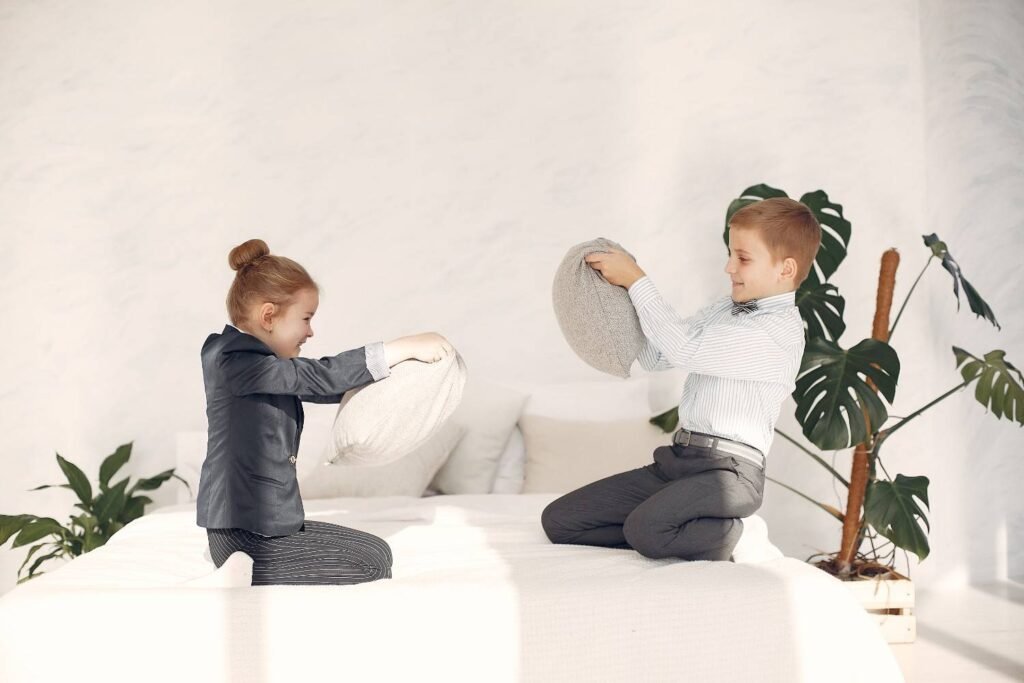
A safer children’s room does not have to be expensive. I would start with the most-used pieces first: the bed, study table, chair, bookshelf, and storage unit. These items affect daily comfort and safety the most.
Parents can also shop secondhand for solid wood pieces and refinish them with water-based paint or natural sealant. Choosing timeless designs instead of trend-based colors also helps furniture stay useful as the child grows.
FAQs About Eco Friendly Kids Furniture
1. What is the safest furniture material for kids?
Solid wood, bamboo, birch plywood, and rubberwood are among the safest options when they are finished with low-VOC, water-based, or natural protective coatings.
2. Is eco-friendly kids furniture worth the cost?
Yes, eco-friendly kids furniture is often worth it because it lasts longer, supports healthier indoor air, and reduces the need for frequent replacements.
3. What certification is best for non-toxic kids furniture?
GREENGUARD Gold is one of the best certifications for low chemical emissions, while FSC is important for responsibly sourced wood.
4. Can sustainable kids furniture still look stylish?
Yes. Many modern sustainable pieces come in clean, neutral, Montessori-inspired, rustic, or playful designs that fit nurseries, bedrooms, and playrooms.
Final Thoughts
When I choose furniture for a child’s room, I want every piece to feel safe, useful, and built to last. The best options combine responsible materials, child-friendly design, non-toxic finishes, and flexible features that support every stage of growth.
A healthier kids room starts with better choices. Whether you are buying a study table, Montessori bookshelf, playroom seat, or storage unit, sustainable furniture can make the space cleaner, smarter, and more comfortable for everyday family life.