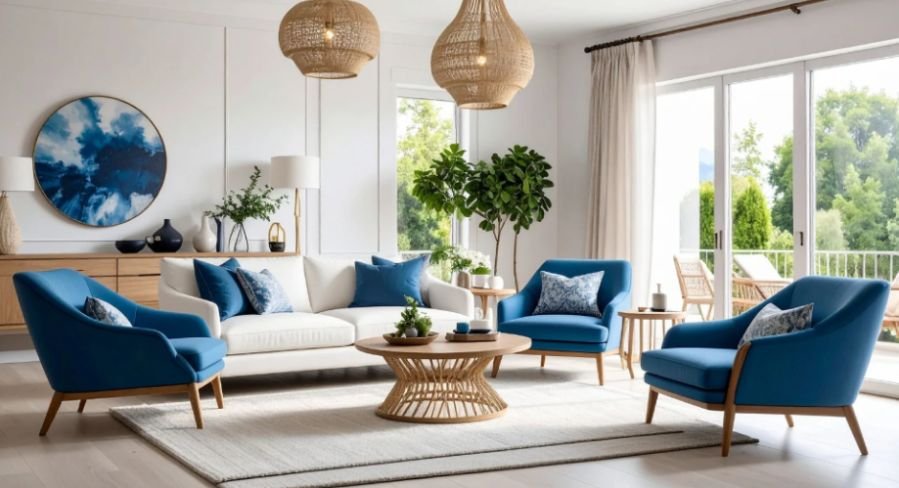
The biggest living room furniture mistakes to avoid usually happen before the furniture even enters your home. I have seen beautiful sofas, rugs, and TV units ruin a room simply because nobody measured, planned walkways, or checked scale first.
A living room should feel easy to move through, comfortable to sit in, and balanced from every angle. When one of those three things fails, the space starts looking expensive but living badly.
Buying Furniture Before Measuring the Room
I always measure before shopping because furniture looks smaller in a showroom. A sectional that feels normal under bright store lighting can swallow a 12-by-14 living room overnight.
Before buying, I mark the furniture footprint on the floor with painter’s tape. This one step shows where the sofa ends, where the coffee table sits, and where people will walk. It also reveals the mistake most people miss: door swings, outlets, vents, and windows.
A smart layout starts with the room, not the catalog. Measure wall length, entry points, window height, TV wall width, and open walking space. Then buy pieces that fit your real home, not your dream mood board.
Blocking Traffic Flow With Bad Furniture Placement
Poor traffic flow is one of the most common living room furniture mistakes to avoid. A sofa should not force guests to squeeze sideways or walk through the middle of a conversation area.
Leave Space Where People Actually Walk
For main walkways, aim for about 30 to 36 inches of clearance when possible. Several interior layout guides use this range for comfortable movement in living spaces.
In small rooms, 24 inches may work near low-use corners. But main routes from the entry to the hallway, kitchen, or patio need more breathing room.
Keep the Conversation Zone Protected
I like to keep traffic paths around the seating zone, not through it. When people constantly cross between the sofa and TV, the room feels unsettled. Shift chairs inward, rotate the sofa, or use a smaller coffee table to open a cleaner route.
Pushing Every Piece Against the Wall

Pushing all furniture against walls sounds logical, but it often creates a cold empty center. The room may technically have more floor space, yet it feels less inviting.
Floating furniture even a few inches from the wall can make the room feel designed. In larger rooms, I pull seating closer together to create a proper conversation zone. The walls can hold lamps, shelves, art, or a console instead of every seat.
This is especially useful in open-plan homes. A floating sofa can divide the living area from the dining space without adding a wall.
Choosing the Wrong Rug Size
A tiny rug under only the coffee table makes the room look disconnected. I call this the “postage stamp rug” problem. It makes even good furniture look random.
A better rug should anchor the seating area. At minimum, the front legs of the sofa and chairs should sit on the rug. Ideally, the rug extends past both sides of the sofa by several inches.
For a standard sofa, an 8-by-10 rug often works better than a 5-by-7. For larger sectionals, a 9-by-12 rug usually feels more balanced. The goal is simple: the rug should connect the furniture, not decorate the empty floor.
Ignoring Scale and Proportion
Scale decides whether a room feels polished or awkward. A bulky sectional in a small apartment can make the space feel crowded. Tiny accent chairs in a large family room can look lost.
Use the Two-Thirds Rule
One proportion trick I use often is the two-thirds rule. A coffee table should be roughly two-thirds the length of the sofa. This keeps the center of the room balanced without making the table feel oversized.
The TV stand should also be wider than the TV. If the TV overhangs the stand, the setup looks top-heavy and unsafe.
Balance Heavy Pieces Across the Room
Do not place every dark, bulky, or tall piece on one side. Balance a large sofa with a substantial chair, console, bookcase, or visual weight on the opposite side.
Buying Matching Showroom Sets
Matching sets are easy, but they can make a living room look flat. A sofa, loveseat, chair, coffee table, and side tables from the same collection rarely feel personal.
I prefer one main anchor piece, then I mix materials. A fabric sofa can work with a leather chair, oak table, woven basket, and metal floor lamp. This creates depth without chaos.
The trick is repetition. Repeat one wood tone, one metal finish, or one color family. That keeps the room cohesive while avoiding the showroom look.
Choosing Style Over Seating Comfort
A beautiful sofa is useless if nobody wants to sit on it. Seat depth, cushion firmness, back height, and arm height matter every day.
Furniture ergonomics research often focuses on how furniture dimensions affect comfort, posture, and usability. A 2024 systematic review found that furniture ergonomics is assessed through factors such as posture, dimensions, and user comfort.
Before buying a sofa, sit the way you actually relax. Do not sit upright for 20 seconds and call it a test. Lounge, lean, cross your legs, and check if your feet touch the floor. If the sofa fights your body, skip it.
Mounting the TV Too High
A TV mounted too high can make a living room feel like a sports bar. Worse, it can strain your neck during long viewing sessions.
Ergonomic guidance for screens commonly recommends placing the top line of text at eye level or slightly below for seated users. For living rooms, that usually means the center of the TV should sit near seated eye level.
In many homes, this lands around 42 to 48 inches from the floor to the screen center. Fireplaces often push TVs too high, so use a lower media wall when possible.
Forgetting Everyday Function
Pretty rooms fail when they ignore daily habits. If you drink coffee on the sofa, you need a reachable table. If kids use the space, you need durable fabrics and storage. If guests visit often, every seat needs a place to set a glass.
This is where many living room furniture mistakes to avoid become obvious. The room looks complete, but it does not support real life.
I use a simple test: sit in every seat and ask what is missing. Can I reach a table? Is there a lamp nearby? Can I see the TV? Is the walkway clear? If the answer is no, the layout needs work.
Overcrowding the Room With Too Many Pieces
More furniture does not mean more function. Too many side tables, ottomans, storage units, and accent chairs can make a room feel visually noisy.
A better approach is to choose fewer pieces with stronger purpose. Use a storage ottoman instead of a coffee table if blankets pile up. Choose nesting tables if space is tight. Pick one large media console instead of several small storage pieces.
Open space is not wasted space. It gives your eyes a break and makes your best pieces stand out.
The “Sit, Walk, Reach” Test I Use Before Finalizing a Layout
My original rule is simple: sit, walk, reach.
First, sit in every seat and check comfort, view, and lighting. Next, walk every normal path through the room without shifting your body. Finally, reach for a table, outlet, lamp, or remote from each seat.
If the room passes all three steps, it usually works. If it fails, fix the layout before buying more decor.
This test prevents expensive mistakes because it focuses on behavior, not just beauty. It also helps you decide when to invest in better pieces or learn how to make living room furniture look expensive with smarter styling.
FAQs About Living Room Furniture Mistakes To Avoid
1. What is the biggest living room furniture mistake?
The biggest mistake is buying furniture without measuring the room and planning traffic flow first.
2. Should living room furniture touch the walls?
Not always. Pulling furniture slightly away from walls often creates a warmer and more balanced seating area.
3. How much space should be between a sofa and coffee table?
About 14 to 18 inches usually keeps the table reachable without blocking legroom.
4. What size rug makes a living room look bigger?
A larger rug that fits under the front legs of seating usually makes the room feel more connected and spacious.
Final Take: Your Sofa Deserves Better Than Bad Planning
Living room furniture mistakes to avoid are not about having perfect taste. They are about respecting space, comfort, movement, and proportion.
Before buying anything new, measure the room, tape the layout, test the walkways, and sit in every seat. Your living room should not just look good for photos. It should work hard, feel easy, and quietly prove that you knew exactly what you were doing.