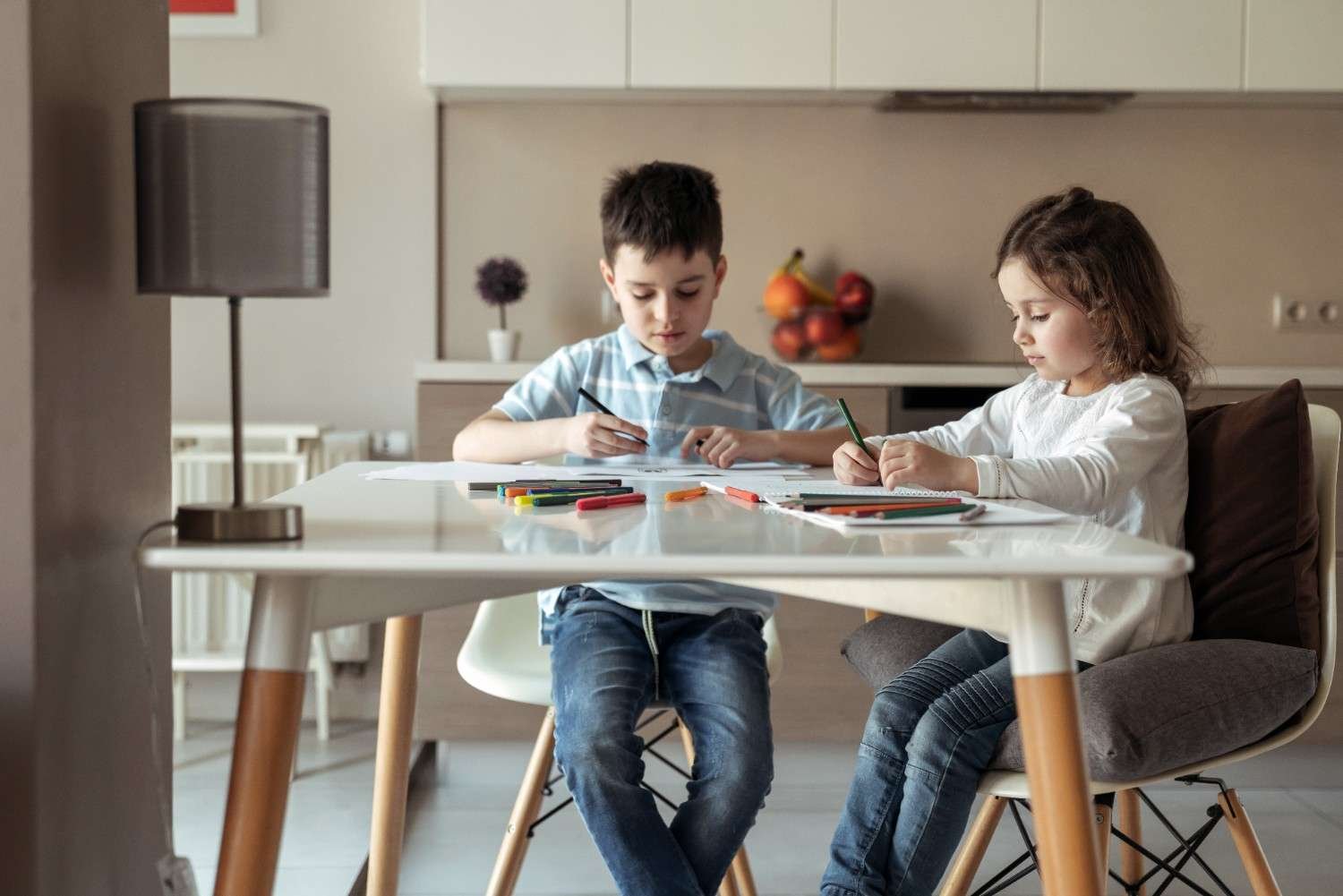
A messy homework corner can turn simple schoolwork into a daily struggle. That is why choosing the right kids study table and chair matters so much. It gives your child a space that feels organized, comfortable, and made just for learning.
From reading and writing to crafts and online classes, the right setup can support better focus, safer posture, and smoother study routines at home.
Why the Right Study Set Matters for Kids
A proper study set helps children separate learning time from playtime. When kids sit at the same desk every day, they build better study habits and stay more focused. It also reduces the chances of poor posture caused by using dining chairs, beds, or coffee tables for homework.
The right children’s study desk and chair should match your child’s height, room size, and daily needs. It should also be strong enough for writing, reading, painting, and school projects. For parents planning kids furniture for sensory room spaces, a stable and comfortable study set can also create a calmer zone for focused activities.
Best Types of Kids Study Sets
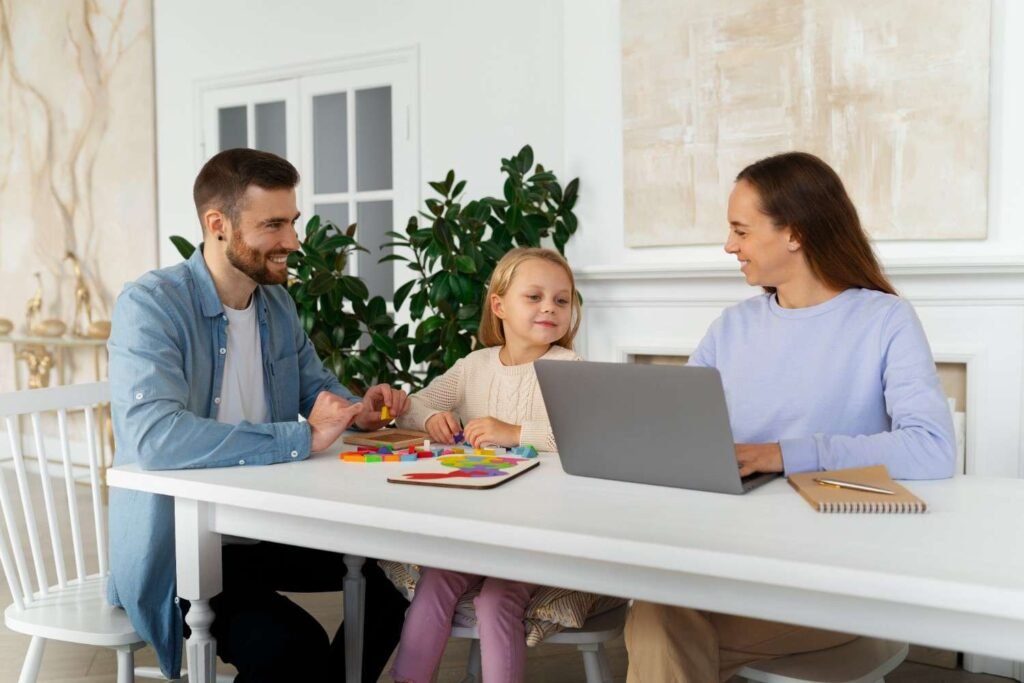
Height-adjustable study sets are one of the best long-term options because they grow with your child. These desks and chairs usually include lifting systems that allow parents to change the height as needed. This can save money because you do not have to replace the furniture every few years.
Wooden storage desks are ideal for parents who want durability and a classic bedroom look. Solid wood and engineered wood desks often include drawers, hutches, shelves, and bookshelves for better organization.
Compact and foldable study sets work well in apartments, shared bedrooms, and small rooms. These lightweight options can fold flat or move easily, making them useful for flexible homework corners or occasional study spaces.
Ergonomic Features Parents Should Check
Ergonomics should be a top priority when buying study furniture. A child should sit with relaxed shoulders, supported feet, and a straight back. The tabletop should allow their elbows to rest naturally without forcing them to lean forward.
Tilted desktops are helpful because they can support different activities. A surface that tilts between 0 and 40 degrees can make reading, writing, drawing, and painting more comfortable. It can also reduce slouching by improving the viewing angle.
The chair should have a contoured backrest that supports the lower spine. Ventilated chair designs can also keep children comfortable during longer study sessions. Anti-slip footrests are another useful feature because they keep the feet planted and improve lower-body stability.
Safety and Build Quality Features’
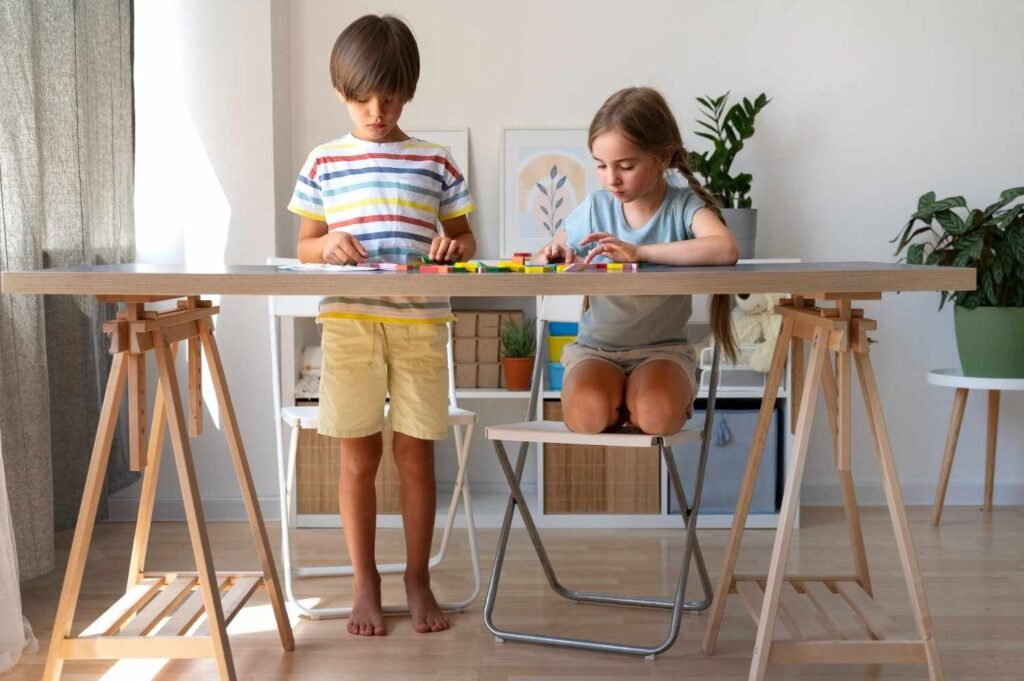
Safety matters as much as comfort. Look for rounded corners because soft edges can prevent bruises and cuts during movement or active play. The desk should feel stable and should not wobble when your child writes or leans on it.
Non-toxic finishes are also important. Parents should check for child-safe, lead-free paints, plastics, laminates, and coatings. If the desk has a lift-top design, anti-pinch hinges or hydraulic struts can protect small fingers from sudden closing lids.
Strong legs, secure screws, smooth surfaces, and stable shelving also help create a safer study space. For taller storage units, wall anchoring may be useful.
Storage Features That Make Homework Easier
A study table with storage can make a big difference in daily organization. Drawers, cubbies, bookshelves, side pockets, and hutches give children a place to store notebooks, pencils, crayons, books, chargers, and art supplies.
I prefer storage that is easy for kids to reach. When children can find their school supplies quickly, homework starts with less stress. A clutter-free desk also helps improve focus and makes the room look cleaner.
Small Room Study Table Ideas

Many families do not have a separate study room, so the study setup must fit into a bedroom, playroom, or living room corner. A compact desk can work well beside a bed, near a window, or against an unused wall.
Foldable desks are useful when space is limited. Corner study tables can also make good use of awkward room layouts. If two children share a room, two slim desks placed side by side can create personal learning zones without taking over the entire space.
Good lighting is also important. Natural light works well during the day, while a soft desk lamp helps during evening homework. Try to avoid screen glare and keep distractions away from the study area.
Common Buying Mistakes Parents Should Avoid
One mistake is buying a desk that is too large because the child will “grow into it.” Oversized furniture can cause poor posture and discomfort. Another mistake is choosing style over function. A cute desk is not useful if it lacks stability, storage, or comfort.
Parents should also avoid chairs that are too high, too deep, or poorly supported. If a child’s feet dangle, they may shift constantly and lose focus. The best setup should feel secure, comfortable, and age-appropriate.
Frequently Asked Questions (FAQs)
1. What is the best age to buy a kids study table and chair?
Most children can start using one during preschool years for coloring, puzzles, reading, and early writing. As they enter elementary school, a proper study set becomes more useful for homework and daily learning.
2. Is a height-adjustable study table worth it?
Yes, a height-adjustable table is worth it for growing children. It helps maintain better posture and can last longer than a fixed-size desk.
3. Are tilted desktops good for children?
Tilted desktops can help children sit more upright while reading, writing, or drawing. They are especially useful when the angle can be safely adjusted and locked.
4. What safety features should parents look for?
Parents should look for rounded corners, stable legs, non-toxic finishes, anti-pinch hinges, secure shelves, and smooth surfaces.
Final Thoughts
A good children’s study desk and chair should support focus, comfort, safety, and organization. I would choose a set that fits the child’s height, offers practical storage, and includes ergonomic features like a supportive chair, footrest, and adjustable or tilted tabletop.
The best kids study table and chair is not just furniture. It is a daily learning space that helps children feel more comfortable, confident, and ready to focus.