I have learned that a productive workspace is not just about buying a desk and chair. The way everything is placed affects focus, energy, comfort, and even how long I can work without feeling drained. That is why Home Office Layout Ideas for Maximum Productivity should begin with smart planning, not random decorating.
Why Your Home Office Layout Matters
A good layout helps reduce distractions and makes daily work feel easier. When the desk, chair, lighting, storage, and technology are arranged properly, the space supports concentration instead of fighting against it.
The best home office should feel calm, organized, and easy to move around in. It should also match the type of work being done. Someone who takes calls all day needs a different setup than someone who writes, designs, studies, or manages paperwork.
Choose the Right Work Zone First
The first step is choosing a quiet area with limited foot traffic. A spare bedroom, unused corner, hallway nook, basement section, or dining room wall can all work if planned correctly without affecting areas meant to boost foot traffic.
The goal is to create a dedicated work zone, even in a small space. This helps the brain separate work time from relaxation time. A simple rug, bookshelf, divider, or wall color can visually define the office area without needing a separate room.
Place the Desk for Better Focus
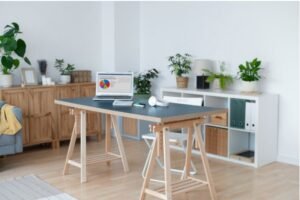
Desk placement is one of the most important layout decisions. Ideally, the desk should face the room entrance or sit sideways to a window. This keeps the space open while still allowing natural light to enter.
Avoid placing the screen directly in front of a bright window because glare can cause eye strain. Also avoid sitting with your back fully exposed to a busy room, as it may create distractions. A wall-facing desk can work well for deep focus, but adding art or a small shelf prevents the space from feeling plain.
Use Natural Light Without Glare
Natural daylight can make a workspace feel fresh and energizing. Place the desk near a window when possible, but use curtains, blinds, or adjustable shades to control brightness.
For evening work, add layered lighting. A ceiling light alone is often not enough. Use a desk lamp for task lighting and a soft floor lamp or wall light to reduce harsh shadows. Good lighting improves comfort and helps the office feel more professional.
Create Work, Storage, and Break Zones
One of the strongest Home Office Layout Ideas for Maximum Productivity is dividing the space into clear zones. The work zone should hold only daily essentials. The storage zone should include files, supplies, books, chargers, and extra equipment. A small break zone can include a comfortable chair, plant, or reading corner.
This layout keeps clutter away from the desk and makes the room feel more intentional. Even a tiny office can have zones if vertical shelves, rolling carts, wall hooks, or under-desk drawers are used wisely.
Small Home Office Layout Ideas
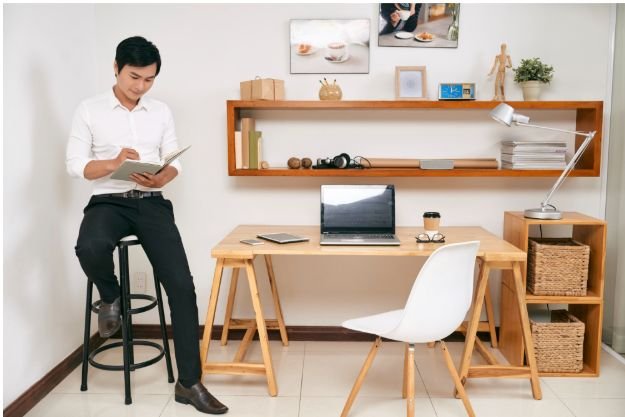
Small spaces need smarter furniture. A wall-mounted desk, floating shelf, corner desk, foldable table, or ladder desk can save valuable floor space. Choose furniture with built-in storage to avoid crowding the room. As part of your home office feng shui tips for better productivity, arrange your furniture to promote a clear flow of movement, reduce visual clutter, and position your desk in a way that helps you feel comfortable, focused, and in control of your workspace.
In a bedroom office, place the desk away from the bed if possible. In a living room office, use a bookcase or console table to blend the workspace with existing decor. In a closet office, add shelves above the desk and use bright lighting to make the area feel open.
Ergonomic Layout Tips
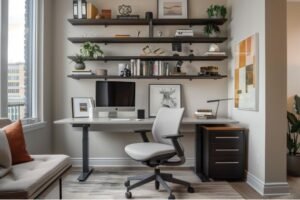
Productivity drops quickly when the body feels uncomfortable. The chair should support the lower back, and the feet should rest flat on the floor or on a footrest. The monitor should be at eye level, and the keyboard should allow relaxed shoulders.
Keep frequently used items within arm’s reach. This includes notebooks, pens, chargers, headphones, and water. Items used less often should go in drawers or shelves. This simple setup reduces unnecessary movement and helps maintain focus.
Keep Cables and Clutter Hidden
Messy wires can make even a beautiful office feel stressful. Use cable clips, cord boxes, under-desk trays, and wireless accessories when possible. Label chargers if multiple devices are used.
A clutter-free desk should include only what is needed for the current task. Use trays for paperwork, baskets for supplies, and closed cabinets for items that look messy. Clean surfaces make the room feel calmer and easier to work in.
Add Plants and Personal Details
A productive office should not feel cold. Add a plant, framed photo, artwork, candle, or textured rug to make the space inviting. However, keep decor balanced. Too many items can become visual noise.
Choose colors that support focus. Soft neutrals, warm wood tones, muted greens, and light blues work well for a calm workspace. Darker tones can feel stylish but should be balanced with good lighting.
Frequently Asked Questions
1. What are the best Home Office Layout Ideas for Maximum Productivity?
The best ideas include placing the desk near natural light, using an ergonomic chair, creating storage zones, reducing clutter, hiding cables, and keeping distractions away from the workspace.
2. Where should a desk be placed in a home office?
A desk works best near natural light but not directly facing glare. Facing the room entrance or sitting sideways to a window usually creates a balanced and comfortable setup.
3. How can I make a small home office productive?
Use vertical shelves, compact desks, wall-mounted storage, foldable furniture, and good lighting. Keep only daily essentials on the desk to avoid clutter.
4. What should every home office include?
Every home office should include a comfortable chair, proper desk height, good lighting, storage, cable management, and a quiet setup that supports focused work.
Final Thoughts
When I plan a workspace, I focus on comfort, clarity, and flow before decoration. A beautiful office is helpful, but a functional office is what keeps work moving smoothly. With the right desk placement, lighting, storage, and ergonomic setup, Home Office Layout Ideas for Maximum Productivity can turn even a small corner into a focused and inspiring workspace.