Finding the right living room furniture for narrow spaces can feel like solving a puzzle with one missing corner. I always start with one rule: the room must be easy to walk through before it looks stylish.
A narrow living room should never feel like a hallway with a sofa trapped inside it. The right furniture can make it feel calm, open, and intentional.
Start With the Walkway, Not the Sofa
Most people buy the sofa first. I measure the walkway first.
A narrow room needs one clear traffic lane. I prefer at least 30 inches for daily movement, but 36 inches is better when possible. The U.S. Access Board notes that accessible routes generally need a 36-inch clear width, which is a useful design benchmark for comfort too.
This does not mean every living room must meet ADA standards. It means your body already knows when a space feels cramped. If guests have to turn sideways, the furniture is too deep.
Place the main walkway along one side of the room. Avoid layouts that force people to zig-zag around chairs, tables, and ottomans.
Choose Shallow Furniture That Does More

The best living room furniture for narrow spaces is not tiny. It is smartly scaled.
Apartment-Size Sofas
Choose an apartment-size sofa with a shallow depth, usually around 30 to 34 inches. Tight arms work better than rolled arms because they save several inches on each side.
I also prefer sofas with raised legs. They expose more floor, which makes the room feel lighter.
Floating Media Consoles
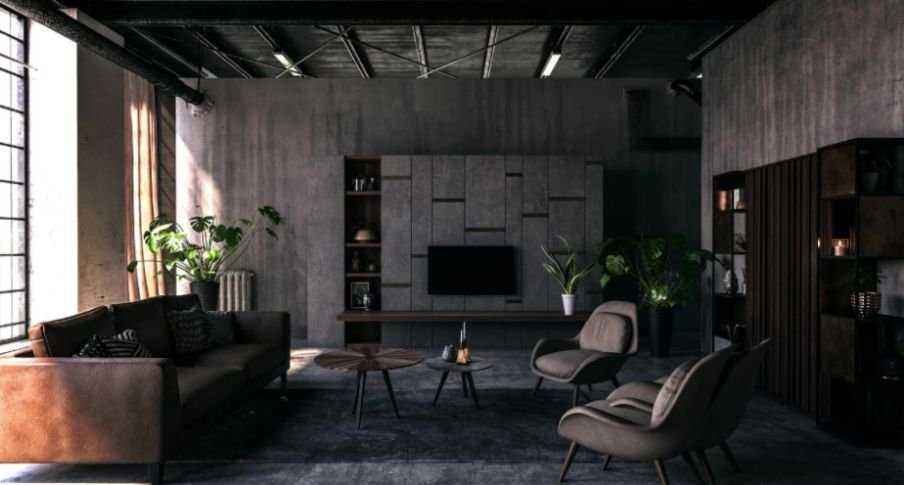
A floating TV console is one of my favorite narrow-room tricks. It keeps storage off the floor and makes the wall look cleaner.
If the TV wall is very tight, skip the bulky entertainment unit. Use a wall-mounted console with closed storage for remotes, cords, and small electronics.
C-Tables, Nesting Tables, and Storage Ottomans
A standard coffee table often blocks movement in a narrow room. I like C-tables because they slide over the sofa arm and move easily.
Nesting tables also work well. Pull them out when guests arrive, then tuck them away later.
A slim storage ottoman is another smart choice. It can hold blankets, serve as a footrest, and become extra seating.
Use Light-Looking Pieces to Avoid the Tunnel Effect

Long narrow rooms can look like bowling alleys. Heavy furniture makes that worse.
Pick leggy accent chairs instead of bulky armchairs. Mid-century-style chairs usually work well because the open base lets light pass through.
Glass, slim wood, cane, and open-frame metal pieces can also reduce visual weight. The goal is not to make the room empty. The goal is to let the eye move.
Avoid placing large furniture on both long walls. That squeezes the center and makes the room feel tighter.
Divide a Long Narrow Living Room Into Zones
A long room often works better as two smaller zones.
One end can hold the sofa, TV, and accent chair. The other end can become a reading corner, small desk area, or compact dining nook.
This breaks the tunnel effect. It also gives the room more purpose.
For example, place a shallow sofa opposite a floating console. Behind the sofa, add a narrow writing desk or console table. You get function without crowding the walkway.
Go Vertical Without Making the Room Feel Busy

Narrow rooms need vertical storage. Tall bookcases, floating shelves, and wall-mounted cabinets keep the floor open.
Keep shelves edited. Too many small objects create visual noise.
Use closed storage for clutter and open shelves for a few styled pieces. Books, baskets, ceramics, and framed art work better than random décor.
Lighting matters too. Glare can make tight spaces feel harsh. Cornell research has linked glare reduction with improved visual comfort in screen-heavy settings, which supports using softer, layered lighting near TV areas.
My Tested Narrow Room Layout Formula
My go-to formula is simple.
Use one shallow sofa, one floating media unit, one slim ottoman, one leggy chair, and one vertical storage piece. Then keep one side of the room open for movement.
This gives you comfort, storage, and seating without turning the room into an obstacle course.
For most homes, living room furniture for narrow spaces should support three things: sitting, storage, and smooth movement. If a piece does not help with at least one of those, it probably does not belong.
Once your narrow room feels balanced, you can also compare it with living room furniture for open floor plan ideas to understand how spacing, zoning, and traffic flow change in larger layouts.
FAQs
1. What furniture is best for a narrow living room?
Shallow sofas, floating TV consoles, nesting tables, C-tables, storage ottomans, and leggy chairs work best.
2. How do you arrange furniture in a long narrow living room?
Create one clear walkway and divide the room into zones for seating, TV viewing, reading, or work.
3. Should a sofa touch the wall in a narrow living room?
Not always. Pulling it a few inches away can reduce the tunnel effect and add breathing room.
4. What coffee table works best in a narrow living room?
A slim ottoman, nesting table, or C-table usually works better than a large rectangular coffee table.
Final Take: Make the Room Strut, Not Squeeze
A narrow living room does not need sad, tiny furniture. It needs pieces with manners.
Choose shallow depths, raised legs, hidden storage, and one clean walking lane. Once the room moves well, the style part gets much easier.