Finding the right dining table for a small home can feel more complicated than buying one for a large room. It’s easy to fall in love with a design online, only to realize it blocks walkways, makes the room feel cramped, or barely leaves enough space to pull out a chair. In compact homes, every piece of furniture has to earn its place.
That’s why a dining table for small spaces should do more than provide a place to eat. It should fit naturally into your everyday routine, whether you’re working from home, sharing family meals, helping kids with homework, or hosting friends for dinner. The right table blends comfort, flexibility, and smart design without overwhelming the room.
Why the Right Dining Table Makes a Big Difference

A small dining area doesn’t have to limit your options. Choosing the right table is more about understanding your space than buying the smallest model available.
Start by thinking about how you actually use your dining area. If you eat with two people most days but occasionally entertain guests, an expandable table may be a better investment than a permanently large one. Likewise, if your dining room doubles as a workspace, choosing a table with a durable surface and flexible seating can make everyday living much easier.
The goal is to create a room that feels open while still serving multiple purposes.
Choose the Shape That Fits Your Layout
The shape of your dining table plays a major role in how the room functions.
Round Tables
Round tables improve traffic flow because they don’t have sharp corners. They’re ideal for breakfast nooks, apartments, and square dining areas. Many pedestal-base designs also create extra legroom, making it easier to fit another chair when needed.
Rectangular Tables
Rectangular tables work well in narrow rooms. Choosing a slimmer design helps maintain comfortable walkways while providing enough seating for everyday meals.
Square Tables
Square tables suit compact households and smaller dining rooms where symmetry works best. They’re especially practical for two to four people without taking over the room.
Extendable and Drop-Leaf Tables
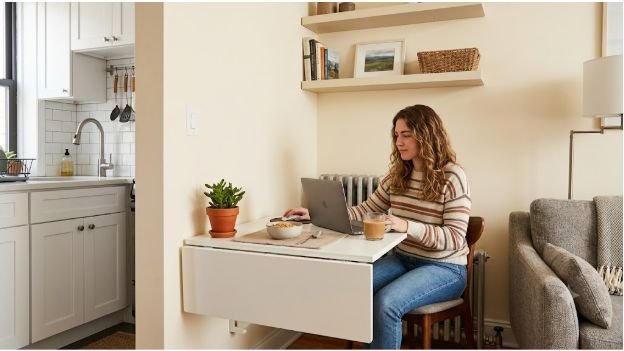
Few furniture pieces offer as much flexibility as drop-leaf or extendable tables. They remain compact during daily use and expand only when extra seating is needed. Some designs even fold into a narrow console, making them ideal for homes where every square foot matters.
Size Matters More Than Style

Before shopping, measure both the room and the area around the table.
A good rule is to leave 36 to 42 inches of clearance between the edge of the table and nearby walls or furniture. This allows chairs to slide out comfortably while maintaining easy movement throughout the room.
It’s also worth measuring doorways, hallways, and staircases before making a purchase. A table that fits your dining room won’t be much help if it can’t make it through the front door.
Rather than choosing a table based on the maximum number of guests you might host once or twice a year, buy one that fits your everyday lifestyle.
Materials That Help a Room Feel Bigger
Material choice affects more than durability. It also changes how spacious a room feels.
Glass tabletops allow light to travel through the room, creating a lighter appearance. Light oak, maple, or white finishes help brighten smaller spaces, while slim metal frames reduce visual weight without sacrificing stability.
Solid wood remains a timeless investment, but engineered wood often offers excellent durability at a more affordable price. Choosing quality finishes that resist scratches and moisture helps extend the life of your furniture, especially in busy households.
Don’t Overlook Your Seating
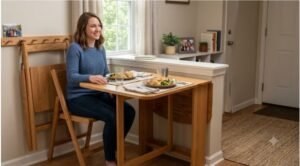
Even the best dining table for small spaces can feel oversized when paired with bulky chairs.
Armless chairs slide underneath the table more easily, while benches maximize seating and stay tucked away when not in use. Acrylic chairs are another popular choice because their transparent design creates an open look instead of adding visual clutter.
If your dining room serves multiple purposes, lightweight chairs make it easy to rearrange the space whenever needed.
Furniture That Works Harder
Modern homes often ask one room to perform several functions, and dining furniture is adapting to meet those needs.
Many homeowners now choose tables that serve as a dining area during meals, a workstation throughout the day, and extra preparation space while cooking. Expandable consoles, drop-leaf tables, and pedestal designs all support this flexible approach without making the room feel crowded.
If you’re also exploring luxury dining room ideas, remember that thoughtful functionality often creates a more refined space than simply adding larger furniture. Well-proportioned pieces usually deliver a cleaner, more sophisticated look.
Common Mistakes to Avoid
- Buying a table before measuring the available space.
- Ignoring the recommended clearance around the table.
- Choosing oversized chairs that limit movement.
- Prioritizing appearance over everyday function.
- Forgetting to consider expandable options for future needs.
- Selecting heavy furniture that visually overwhelms the room.
FAQs: Dining Table for Small Spaces That Blend Function With Everyday Living
What is the best shape for a dining table in a small room?
Round tables usually work best because they improve movement, eliminate sharp corners, and make it easier to add extra seating when needed.
How much space should I leave around a dining table?
Aim for 36 to 42 inches between the table and surrounding walls or furniture. This allows chairs to move freely and keeps walkways comfortable.
Are extendable dining tables worth buying?
Yes. They’re ideal for compact homes because they stay small during everyday use while providing additional seating for holidays, family dinners, or guests.
Which seating works best with a small dining table?
Armless chairs, benches, and lightweight seating are practical choices. They save space, tuck neatly under the table, and help the room feel more open without sacrificing comfort.
Making Every Square Foot Feel More Comfortable
A well-chosen dining table does more than fill an empty corner. It supports everyday routines, adapts to changing needs, and helps even the smallest room feel welcoming. When size, shape, materials, and seating work together, a compact dining area can feel surprisingly spacious without giving up functionality or style.
The best furniture isn’t always the biggest piece in the room. It’s the one that quietly makes daily life easier.